History of Bexley Chapel
Compiled from the church's records
Formation Days of the Church
The origins of the church can be traced to 1817 when John Row, the first pastor of Crayford Baptist Chapel, left with fourteen members to establish a new cause in Bexley. A small meeting house was opened, and the church became associated with the Strict and Particular Baptists.
The next recorded activity occurred in 1842 when Mr Kelsey opened a room for worship in Bexley. In 1845 a Gospel Church was formally constituted by Mr Baker. On 13 April 1846 a licence for dissenting worship was issued for premises owned by the Kelsey family. This became the only nonconformist place of worship in the village until 1876.
The church experienced periods of weakness during the nineteenth century and by 1885 the congregation had fallen to seven people. A turning point came in 1892 when John Piggott moved to Bexley and worked tirelessly for the welfare of the cause. The church was reorganised in 1893 and eighteen members were united in fellowship.
First Building
Following the formation of the church, plans were made to establish a permanent place of worship. Through the generosity and efforts of local friends, a chapel was built and opened on 6 May 1846.
As the congregation grew, the original building became inadequate. Between November 1892 and July 1893 the old chapel was demolished and rebuilt on the same site. A schoolroom was incorporated into the project and the freehold was secured for the church. At the same time the cause was reorganised and strengthened under the leadership of committed members and supporters.
New Building
By the early twentieth century the rebuilt chapel could no longer accommodate the growing congregation and Sunday School. In 1903 the church decided that a move to a larger site was necessary. Land was purchased in Victoria Road (now called Albert Road) and after much prayer, planning, fundraising and sacrificial giving, construction began in 1905.
The foundation stone was laid by John Piggott in August 1905. The work was completed later that year and the first services in the new chapel were held on 3 December 1905. Opening services were conducted on Easter Monday, 16 April 1906.
The building, which remains the church's place of worship today, has undergone various renovations and improvements over the years, including restoration following wartime bomb damage in 1944, major refurbishment projects, heating upgrades, a rear extension completed in 1994, and numerous other improvements to preserve and enhance the facilities.
Memorial Homes
The idea for the War Memorial Homes originated in 1917 among the younger people of the church and congregation. Funds were raised through subscriptions and donations as a memorial to those affected by the First World War.
In 1918 land adjoining the chapel was purchased for the project, and despite many difficulties, including fundraising challenges and obtaining finance, the homes were completed in 1926. The first residents were Mrs Watkins and Mr Belcher.
The homes provided accommodation for elderly and needy people for many years. Eventually, compulsory purchase associated with the construction of Thanet Road led to the closure and transfer of the homes in 1967. The resulting funds were placed into a charitable trust which for a time provided support to needy people attending the chapel, or similar chapels within a radius of the chapel, fulfilling the original vision of the Memorial Homes.
Key People and Pastors
John Row
Founder of the original cause in Bexley in 1817 and believed to have led the congregation for many years.
Thomas Kelsey
Instrumental in opening a room for worship in Bexley in 1842. His family played a significant role in establishing the church and chapel.
W. H. Evans
The church's first recognised pastor, serving from 1862 to 1865.
Hiram G. Maycock
Served as pastor from 1893 until his death in 1894 and was closely associated with the revival of the cause.
John Piggott (Deacon)
One of the most influential figures in the church's history. His leadership, generosity, and vision were central to the reorganisation of the church in 1893 and the building of the present chapel.
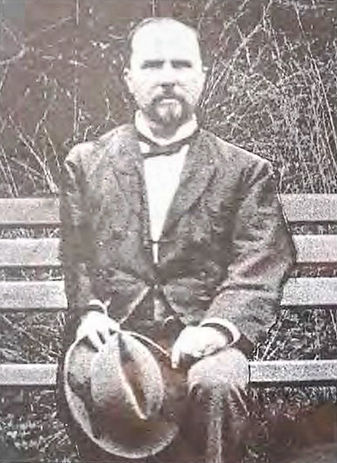
Arthur H. Pounds (Pictured outside the chapel)
Pastor from 1896 until 1946. His remarkable fifty-year ministry guided the church through growth, the construction of the present building, two world wars, and the development of the Memorial Homes.
C. D. Barker
Began his pastorate in 1964 and oversaw significant developments including refurbishment projects and discussions concerning the future of the Memorial Homes.
Neil J. Broome
Accepted the pastorate in 1984 and served during a period of renewed activity among young people, Bible studies, building improvements, and the construction of the rear extension.
Current Pastor
In 2007, Mr Richard Wells was appointed pastor of the church. The church continues to worship at the chapel in Bourne Road, seeking to uphold the doctrines and practices maintained throughout its long history and continuing its witness in Old Bexley.
Joining the Gospel Standard
The church's relationship with the Gospel Standard developed gradually over many years. Questions concerning formal identification with the Gospel Standard arose during the opening of the new chapel in 1906 but were not resolved at that time.
In 1925 the pastor and deacons carefully examined the Gospel Standard Articles of Faith. Following prayerful consideration, they publicly affirmed their agreement with these articles and their desire to continue in the truths maintained since the church's formation.
This declaration was published in the January 1926 edition of the Gospel Standard magazine. Following an invitation from the Gospel Standard Committee, the church unanimously agreed on 3 February 1926 to unite openly in fellowship with the Gospel Standard churches.